Buying a home in Canton, Ohio, is a significant financial milestone that requires more than just a pre-approval letter and a successful offer. To protect your investment in Northeast Ohio’s real estate market, you must conduct thorough due diligence using official public records. Whether you are looking in the historic neighborhoods of Downtown Canton or the suburban residential corridors of the outer wards, accessing government-verified data is the best way to avoid hidden liabilities and ensure long-term property value. This checklist empowers you to navigate the process with professional-grade confidence.
1. Master Homebuyer’s Action Checklist
To make buying a home in Canton easier and structured, plan ahead using this master verification framework. Proper preparation allows you to focus on your target home parameters, assemble administrative paperwork, and quickly address requirements from your real estate agent, mortgage lender, closing attorney, and inspector.
- [ ] Establish Local Representation: Partner with a licensed Northeast Ohio real estate agent who has direct transactional experience in Stark County.
- Define a Mortage Budget: Schedule a consultation with a local lender to evaluate available financing structures (such as conventional, FHA, or VA loan programs).
- Verify Your Credit Standing: Pull your credit history report to identify and dispute any unexpected delinquencies before underwriter reviews.
- Secure Loan Pre-Approval: Obtain a formal pre-approval letter to verify your buying power to prospective home sellers.
- Segregate Wants vs. Needs: Outline your absolute physical requirements versus flexible structural preferences before touring properties.
- Hire a Real Estate Attorney: Secure legal counsel if you are structuring complex terms, dealing with zoning changes, or purchasing without standard representation.
- Prepare an Offer to Purchase: Work with your agent to draft a legally binding purchase contract aligned with Canton’s market trends.
- Deposit Earnest Money: Place your initial financial deposit into a secure escrow account managed by a licensed Ohio title agency.
- Order Inspections and Appraisals: Schedule professional structural, septic (if applicable), and environmental assessments along with lender-required appraisals.
- Secure Final Financing: Finalize mortgage underwriting terms and prepare funds needed to satisfy the transaction’s closing costs.
- Obtain Structural Insurance Policies: Secure comprehensive homeowner’s insurance and verify your title insurance policy to guard against past ownership claims.
- Complete the Closing Process: Sign final transaction papers and ensure the title company records the deed at the Stark County Recorder’s Office.
2. Wants and Needs Analysis for Northeast Ohio Properties
Before touring Canton homes, categorize your home preferences. Identifying features early helps you avoid unnecessary showings and ensures the home matches your long-term plans.
Essential Price and Age Parameters
- Price Range: Define your maximum budget limit to avoid financial strain from high interest rates.
- Age of Home: Specify if you prefer new builds or historic Canton homes (historic homes can require regular updates but offer unique craft details).
Structural Layout Preferences
- Rooms Configuration: Determine the minimum number of bedrooms and bathrooms required for your household size.
- Basement Requirements: Decide if your lifestyle requires a full or partial basement, and whether you need it finished, unfinished, or walkout.
- Flexible Spaces: Identify if you need a den, home office, spacious family room, or a convenient first-floor laundry room.
- Outdoor Amenities: Choose between custom porches, rear decks, concrete patios, detached storage sheds, or secure yard fencing.
- Garage Specifications: Specify the required parking capacity (e.g., 2-car attached garage or detached backyard workshop structures).
HVAC Systems and Municipal Utilities
- Heating Systems: Verify the heating fuel source (natural gas, electric, or fuel oil) and the delivery system (forced air, heat pump, or historic radiators).
- Cooling Systems: Confirm if the home has central air conditioning, wall units, or ceiling fans.
- Utility Connections: Check if the home is connected to public water and city sewer services, or if it relies on a private water well and septic system.
3. Go the Stark County Auditor’s Real Estate Portal
The most essential step for any buyer in Canton is utilizing the Stark County Auditor’s Real Estate Search portal. As the Chief Assessment Officer for the county, the Auditor maintains the most accurate and up-to-date repository of property data in the region. Before finalizing any purchase contract, you should treat the Auditor’s property card as your primary source of truth regarding the parcel’s physical and fiscal status.
Why the Auditor’s Data Matters
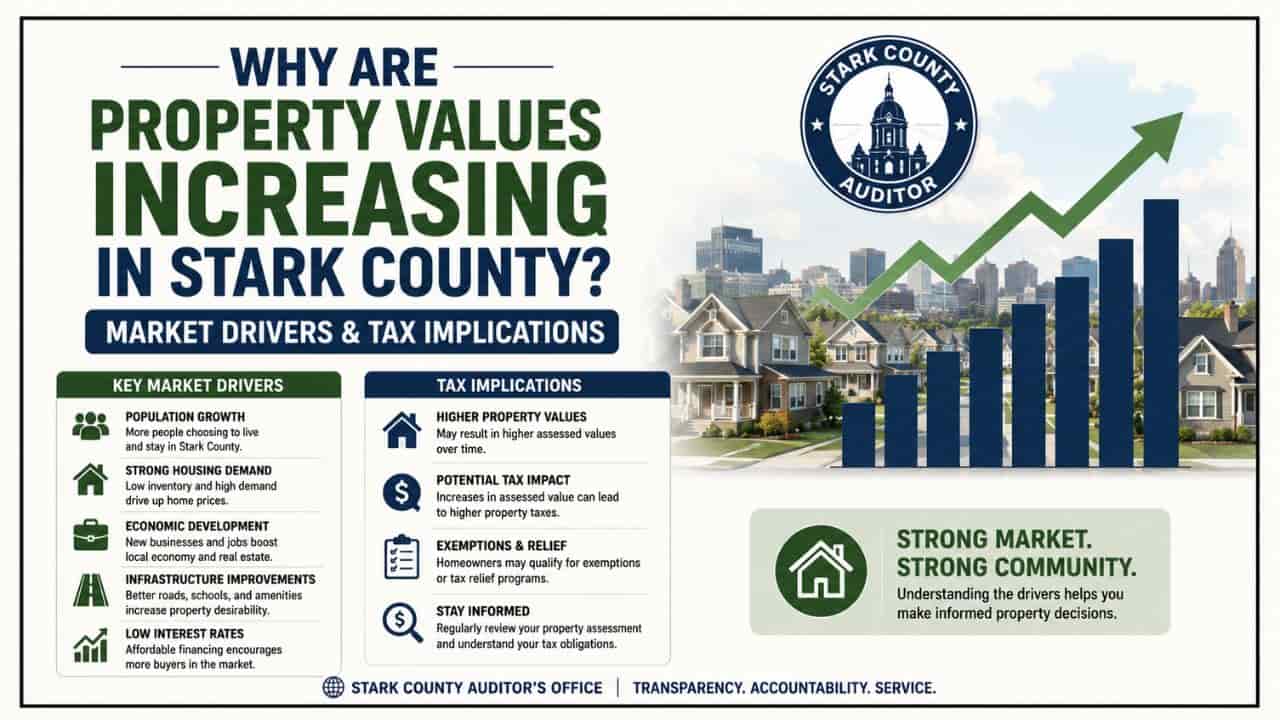
The property card provides a “DNA profile” of your target home. It contains historical sales data, precise square footage measurements, structural classifications, and, most importantly, the current market value used to calculate your property taxes. By reviewing this, you ensure that the listing details provided by a seller match the official government records, preventing surprises regarding tax liabilities or zoning classifications post-closing.
4. Key Public Records Every Buyer Must Verify
A professional-grade due diligence process requires looking beyond the seller’s disclosures. You need to investigate three distinct layers of public data to ensure the property is free from encumbrances and properly valued.
The Chain of Title and Lien Search
Before you sign a deed, you must confirm the chain of title. This history shows every owner who has held the property since it was first recorded. If there are gaps in this history, or if liens—such as unpaid municipal taxes, contractor judgments, or home equity loans—are attached to the property, these become your responsibility once the title is transferred. Always engage a licensed Ohio title agency to perform an independent search, which cross-references the historical filings at the Stark County Recorder’s Office.
Tax Delinquencies and Assessments
Property taxes in Ohio are billed one year in arrears. This means that a seller might be responsible for a tax bill that has not yet been collected. You must check the Auditor’s records to ensure the current tax balance is paid in full. Additionally, some Canton properties may have active special assessments—these are specific charges for municipal improvements, such as sidewalk replacements or sewage line upgrades, that are added to your tax bill for a set number of years.
The following table categorizes the primary records you must verify before closing to ensure your investment is clean:
| Record Type | Primary Custodian | Why It Matters to You |
|---|---|---|
| Appraised Market Value | Stark County Auditor | Determines your baseline for future property tax obligations. |
| Conveyance Documents | Stark County Recorder | Confirms the legal chain of title and identifies existing easements. |
| Building Permits | Canton Building Dept. | Ensures past renovations meet code and lack “fix-it” orders. |
5. Making the Offer: From Contract to Closing
When you sign a purchase offer and the seller accepts it, the document becomes a legally binding real estate contract. Follow this structured process with your agent to draft, negotiate, and execute your transaction safely:
Phase A: Prepare the Offer Terms
- Inspect the Location: Visit the property’s street at different times of the day to evaluate traffic, street parking, noise levels, and neighborhood activity.
- Establish Fair Market Value: Review local home sales data with your agent to determine a reasonable offer price based on the home’s physical condition.
- Confirm Loan Capacity: Double-check your final loan limits with your mortgage lender to make sure your offer matches your pre-qualification boundaries.
Phase B: Execute the Contract Details
- Specify Contingencies: Protect your earnest money deposit by writing clear contingencies for home inspections, lender appraisals, and final loan approvals into the contract.
- Define Timelines: Establish clear dates for structural remedy periods, the final walkthrough, and the official transfer of home ownership.
- Prepare for Seller Responses: Be ready for the seller to either accept your initial terms, present a formal counteroffer with modified pricing, or reject your offer outright.
6. Addressing Common Red Flags in Canton Real Estate
Even with public records, savvy buyers must remain alert for red flags that indicate a property might be a poor investment.
- Discrepancies in Square Footage: If the listing claims 2,500 square feet, but the Auditor’s property card shows 2,100, the seller might be including non-permitted additions or finished basement space that does not meet local code standards.
- Persistent Tax Delinquency: A history of missed tax payments can indicate a property owner who has neglected basic maintenance. In Canton, properties with chronic delinquency often undergo deferred maintenance, which can lead to expensive repairs for the new owner.
- Unexpected Zoning Transitions: Check if the property borders a commercial zone. A home might seem perfect today, but if the surrounding neighborhood is being rezoned, you may face future noise or traffic issues.
7. Professional Expert Advice: Closing the Deal
Once you have verified the data, you must synthesize it into your final decision. The role of the Stark County Auditor is to provide the data, but your role is to interpret it. If you discover a significant discrepancy such as an unrecorded lien or a tax value that seems vastly inflated bring this to your real estate agent and your title officer immediately. Do not proceed to closing until you have a clear, written explanation or a legal resolution for these items.
Conclusion
Securing a home in Canton is a rewarding process when you treat public records as your primary shield. By proactively verifying municipal data through the Stark County Auditor, you completely eliminate the risk of hidden structural and financial liabilities. Use this master checklist as your definitive roadmap to close your transaction safely, ensuring your home purchase remains a highly secure, transparent, and financially sound investment in Northeast Ohio’s competitive market.
FAQs
What is a Parcel Identification Number (PIN)?
A PIN is a unique code assigned by the Stark County Auditor to every real estate parcel, used to track tax records, ownership history, and legal descriptions.
Where can I check if a property has a history of tax delinquency?
You can verify tax status through the official Stark County Auditor’s Real Estate Search portal by entering the property address or parcel number.
Should I hire a title company if the seller has a title history?
Yes. An independent title agency ensures that no unrecorded liens or legal disputes exist that could threaten your legal ownership of the home.
How do special assessments affect my Canton home taxes?
Special assessments are extra charges for local public works (like street lighting or drainage). These are attached to the property, not the owner, so they transfer to you at closing.
Can I appeal the Auditor’s valuation after I buy a home in Canton?
Yes. If you believe the Auditor’s market value is too high, you can file a formal complaint with the Stark County Board of Revision between January 1 and March 31.